编者按:结外淋巴瘤是指发生在淋巴结外的淋巴系统相关恶性肿瘤,约占所有淋巴瘤的30%。这些淋巴瘤多为原发性,通常发生在非典型部位,如中枢神经系统、睾丸、鼻腔、副鼻窦、胃肠道和皮肤等。由于其临床表现隐匿且影像学非特异,早期常被误诊为其他疾病。在近日举办的中国临床肿瘤学会(CSCO)第九届血液肿瘤学术大会上,瑞士南部肿瘤研究所Emanuele Zucca教授分享了题为“Advancing Clinical Research in Rare Extranodal Lymphomas: Practice-Changing Progress Through Global Collaboration”(罕见结外淋巴瘤的临床研究进展:通过全球合作实现改变实践的进展)的演讲,深入探讨了全球合作如何推动该领域的研究进展,并在采访中进一步阐述了新技术如何改善诊断和治疗策略。
《肿瘤瞭望-血液时讯》近年来罕见结外淋巴瘤的临床研究取得了哪些重要进展?您认为这些进展如何改变了对该疾病的诊断和治疗策略?
Emanuele Zucca教授:正如我在本次大会的演讲中所展示的,结外淋巴瘤患者的预后在过去二十年中发生了显著变化。尤其在原发性中枢神经系统淋巴瘤和原发性睾丸淋巴瘤患者的生存率方面,我们取得了重要进展。二十五年前,这些疾病的预后较差,长期存活率不足20%。然而,如今我们能够治愈超过70%的患者,尽管许多患者属于老年群体。这一进展得益于学术界的协作研究。
Oncology Frontier-Hematology Frontier:What breakthrough advances have been made in the clinical research of rare extranodal lymphomas in recent years? How have these advances driven innovation in diagnostic techniques and treatment methods?
Professor Emanuele Zucca:Thank you for your question. As presented in my talk at the Chinese Society of Clinical Oncology, the prognosis for patients with extranodal lymphomas has undergone a remarkable transformation over the past two decades. Notably, we have achieved significant improvements in the survival outcomes of patients with primary CNS lymphoma and primary testicular lymphoma—conditions that, 25 years ago, carried a poor prognosis, with fewer than 20% of patients surviving long-term. Today, we are able to achieve long-term remission in over 70% of these patients, despite the fact that many are elderly. These advances have been made possible through collaborative academic research.
《肿瘤瞭望-血液时讯》随着精准医疗的发展,罕见结外淋巴瘤的治疗也在不断变化。您能分享一下当前最具前景的治疗策略或研究方向吗?
Emanuele Zucca教授:过去几十年里,临床领域出现了两项重大进展,极大地提升了我们的诊疗能力。首先是PET-CT,它为我们提供了关于患者治疗反应的宝贵信息,使得分期和再分期更加精准。其次是液体活检,特别是循环肿瘤DNA(ctDNA)的应用,它在检测微小残留病(MRD)以及解决治疗后PET-CT中的假阳性问题方面发挥了重要作用。我相信,这些技术,尤其是ctDNA,将在未来的临床试验中发挥关键作用。例如,我们正在计划一项针对原发性纵隔淋巴瘤的减低治疗强度研究,并利用PET-CT和液体活检来共同定义完全缓解。
Oncology Frontier-Hematology Frontier:With the development of precision medicine, the treatment of rare extranodal lymphomas is evolving. Can you share some of the most promising treatment strategies or research directions in this area?
Professor Emanuele Zucca:Over the past few decades, two major advancements have significantly enhanced our clinical capabilities. The first is the use of PET scans, which provide invaluable insights into how patients respond to treatment, enabling more precise staging and restaging. The second advancement is liquid biopsy, particularly the use of circulating tumor DNA (ctDNA) to detect minimal residual disease and address challenges such as false positives in post-treatment PET scans. I believe these tools, especially ctDNA, will play a pivotal role in shaping the future of clinical trials. For instance, we are planning a de-escalation study in primary mediastinal lymphoma, based on the definition of complete response using both PET scans and liquid biopsy.
总 结
近年来,罕见结外淋巴瘤的临床研究取得了显著进展,特别是在原发性中枢神经系统淋巴瘤和原发性睾丸淋巴瘤的治疗上,患者的生存率有了显著提升。二十五年前,这些疾病的预后较差,长期存活率不足20%。然而,随着学术界的协作研究,现如今超过70%的患者能够获得长期缓解,尤其是针对老年患者群体。治疗策略的创新也得益于精准医疗的不断发展,PET-CT和液体活检技术的应用成为了关键。PET-CT为治疗反应评估和精准分期提供了重要支持,而液体活检,尤其是ctDNA的应用,推动了MRD检测的进步,并有效解决了治疗后PET-CT中的假阳性问题。未来,ctDNA等技术预计将在临床试验中发挥重要作用,如目前正在进行的原发性纵隔淋巴瘤减低治疗强度的研究,旨在通过PET-CT和液体活检共同定义完全缓解,为个性化治疗策略的优化提供重要数据。
会场花絮
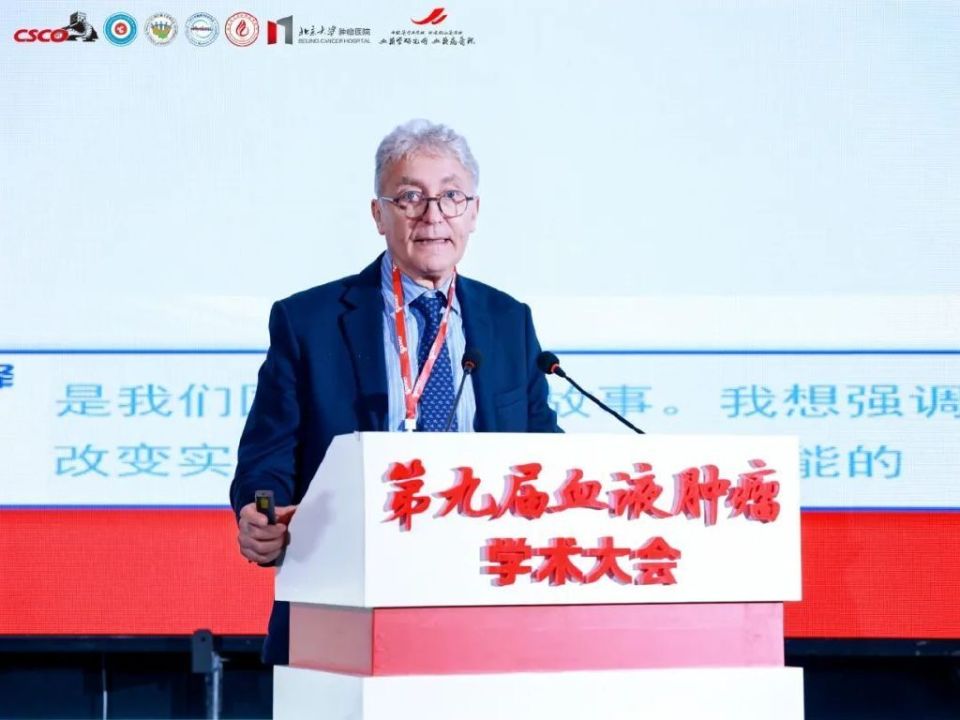
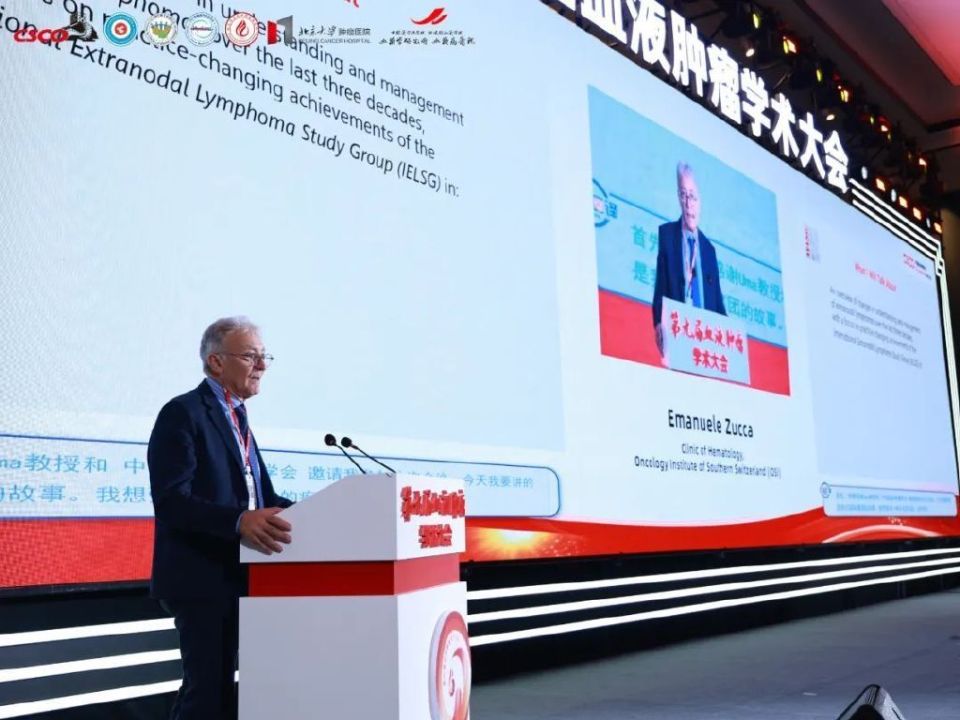

Emanuele Zucca 教授
瑞士南部肿瘤研究所(IOSI)顾问和淋巴瘤部门负责人
国际结外淋巴瘤研究组(IELSG)联合创始人兼科学总监
瑞士临床癌症研究组(SAKK)理事会成员
瑞士癌症联盟科学委员会成员
Blood、Hematological Oncology、British Journal of Haematology、Clinical Lymphoma、Myeloma & Leukemia编委