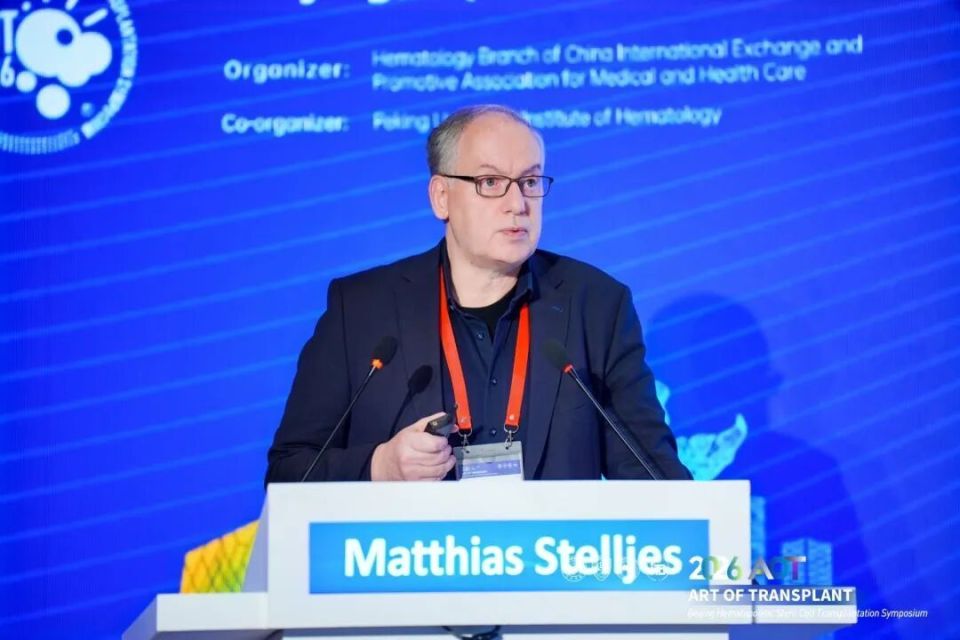
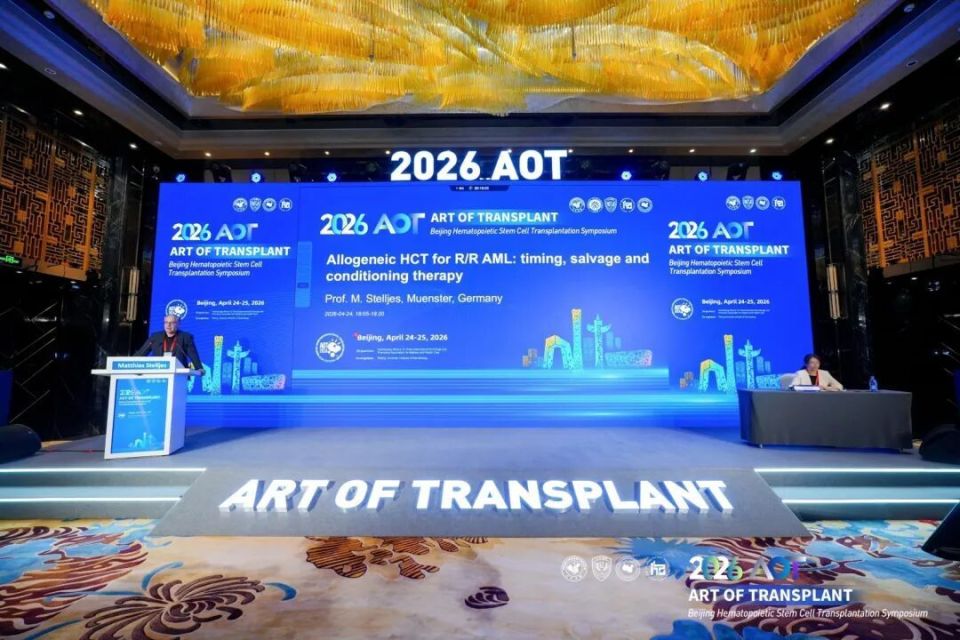
为全面提升人民健康水平,完善重大疾病防治策略,医学创新与国际协作已成为驱动临床进步的关键力量。在此背景下,2026年4月24日至25日,由中国医疗保健国际交流促进会血液学分会主办,血液系统疾病国家临床医学研究中心、北京大学血液病研究所承办的“2026北京国际造血干细胞移植学术会议(AOT)”于北京隆重召开。本届大会以“移植的艺术”为核心主题,汇聚全球血液学领域的顶尖学者,深入探讨造血干细胞移植领域的前沿技术创新与发展趋势。会议期间,《肿瘤瞭望-血液时讯》特邀德国明斯特大学医院Matthias Stelljes教授接受采访,围绕复发/难治性急性髓系白血病造血干细胞移植中的关键临床问题,分享其学术观点与实践经验,以期为临床诊疗提供有益参考。
对于复发/难治性急性髓系白血病(R/R AML)患者,移植时机的把握至关重要。您如何在“尽早移植”与“桥接治疗以降低疾病负荷”之间取得平衡?当前在决定进入移植窗口时,最关键的评估指标有哪些(如MRD状态等)?
Matthias Stelljes教授:决定是否直接进行移植的首要考量因素是供体的可及性。若为全相合亲缘供体,通常在供体确认后可于较短时间内启动移植流程。然而,临床上多数患者依赖于非亲缘供体,此类情况下获取造血干细胞一般需4周左右,部分患者的等待时间可能更长。此外,疾病的生物学特征亦是关键决策依据。例如,对于高疾病负荷、合并全血细胞减少、骨髓原始细胞比例高达80%的患者,长达4周的等待期并非适宜选择。此时,必须通过相应治疗以降低肿瘤负荷。因此,结合临床经验,供体可及性与疾病生物学特征是决定采取直接移植抑或桥接治疗方案的核心因素。
Q1、For patients with relapsed/refractory acute myeloid leukemia (R/R AML), the timing of transplantation is critical. How do you balance the strategy of “proceeding to transplant as early as possible” with the need for bridging therapy to reduce disease burden? What are the most important parameters when defining the optimal transplant window (e.g., MRD status)?
The primary consideration in deciding whether to proceed directly to transplantation is donor availability. For an HLA-identical sibling donor, the transplant process can typically be initiated within a short time after donor confirmation. However, in clinical practice, most patients rely on unrelated donors. In such cases, obtaining hematopoietic stem cells generally takes about four weeks, and the waiting period may be even longer for some patients. Furthermore, the biological characteristics of the disease are also a key factor in decision-making. For example, for patients with a high disease burden, concurrent pancytopenia, and a bone marrow blast percentage as high as 80%, a four-week waiting period is often not a suitable option. In such situations, corresponding treatment must be administered to reduce the tumor burden. Therefore, based on clinical experience, donor availability and disease biology are the core factors in deciding whether to proceed with direct transplantation or a bridging therapy regimen.
在进入移植前的挽救治疗方面,近年来新药及联合方案不断涌现。您如何看待这些新型方案在提高缓解率、优化移植前状态中的作用?在实际临床决策中,如何选择最合适的挽救策略以最大化移植获益?
Matthias Stelljes教授:目前已有数种针对特定基因突变的靶向药物应用于临床,其中FLT3抑制剂是代表性药物之一。对于FLT3阳性的急性髓系白血病(AML)患者,标准治疗仍推荐使用FLT3-ITD抑制剂,尤其吉瑞替尼已获批准且表现出显著疗效,可作为重要选择。此外,IDH1与IDH2抑制剂也可考虑,其与阿扎胞苷或地西他滨联合使用的方案已积累一定临床数据,但目前支持证据主要来源于Ⅱ期临床研究。对于一般状况无法耐受高强度桥接治疗的患者,该联合方案或可作为备选。然而,这两种抑制剂目前尚未获准用于复发或难治性疾病场景,且在临床应用中,其费用覆盖审批往往需要一定时间,这也是实际治疗中需综合考量的因素之一。
Q2、Regarding salvage therapy prior to transplantation, a number of novel agents and combination regimens have emerged in recent years. How do you view their role in improving remission rates and optimizing pre-transplant disease status? In real-world clinical decision-making, how do you select the most appropriate salvage strategy to maximize transplant benefit?
Several targeted drugs for specific gene mutations are now available for clinical use, with FLT3 inhibitors being among the representative agents. For patients with FLT3-positive acute myeloid leukemia (AML), the standard treatment remains the use of FLT3-ITD inhibitors. Gilteritinib, in particular, is an important option as it is approved and has demonstrated significant efficacy. Additionally, IDH1 and IDH2 inhibitors can be considered. Treatment regimens combining these with azacitidine or decitabine have accumulated some clinical data, although the current supporting evidence primarily comes from Phase II clinical studies. For patients whose general condition cannot tolerate high-intensity bridging therapy, this combination may serve as an alternative. However, it should be noted that these two inhibitors are not yet approved for use in relapsed or refractory disease settings. Moreover, in clinical application, the reimbursement approval process often requires a certain amount of time, which is a practical factor that must be integrated into the overall treatment considerations.
针对R/R AML患者的预处理方案设计,既需要增强抗白血病效应,又要控制毒性。您如何看待强化预处理与减低强度预处理(RIC)在这一人群中的应用边界?未来在个体化预处理方案优化方面,可能的突破方向是什么?
Matthias Stelljes教授:在选择强化预处理方案时,需重点评估患者的体能状态与合并症情况,并非所有患者均适合接受包含高剂量美法仑及全身照射(TBI)的高强度预处理方案。对于此类患者,需相应降低美法仑剂量,或转而采用强度较低的预处理方案,同时更加注重利用移植物抗白血病(GVL)效应。在临床实践中,这通常通过快速递减乃至停用免疫抑制预防药物,并对患者微小残留病(MRD)进行密切随访监测来实现,以便及时采取干预措施,例如进行供者淋巴细胞输注(DLI)或应用新型靶向药物。
Q3、In designing conditioning regimens for patients with R/R AML, there is a need to enhance anti-leukemic efficacy while minimizing toxicity. How do you define the boundaries between myeloablative conditioning and reduced-intensity conditioning (RIC) in this population? Looking ahead, what are the potential directions for advancing individualized conditioning strategies?
When selecting an intensified conditioning regimen, it is essential to thoroughly evaluate the patient's performance status and comorbidities. Clearly, not all patients are suitable for a high-intensity conditioning regimen that includes high-dose melphalan and total body irradiation (TBI). For such patients, it is necessary to correspondingly reduce the melphalan dose or switch to a lower-intensity conditioning regimen, while placing greater emphasis on harnessing the graft-versus-leukemia (GVL) effect. In clinical practice, this is typically achieved by rapidly tapering or even discontinuing prophylactic immunosuppressive medications and conducting very close monitoring of the patient's minimal residual disease (MRD). This allows for timely interventions, such as donor lymphocyte infusion (DLI) or the use of novel targeted agents.
专家简介
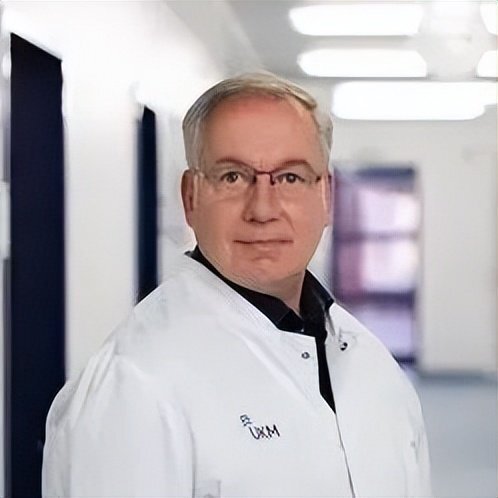
Matthias Stelljes
德国明斯特大学医院
内科A医学诊所(血液学、肿瘤学、呼吸病学)(Med A)
专业领域:肿瘤免疫学、移植免疫学、异基因造血干细胞移植、急性髓系白血病、急性淋巴细胞白血病
学历背景:1990年 - 1997年 德国基尔大学,医学院
工作经历:
2010年2月 获血液学与肿瘤学专科医师资格
2007年6月 获内科学专科医师资格